Car cover guides
How to Choose the Right Car Cover
The best cover is not simply the thickest or most expensive. It is the one whose environment, material and fit match the way your car is actually stored.
The short answer
Choose by storage environment first, then fit, breathability and frequency of use. Those four decisions will usually identify the right cover range.
A four-step decision
Work from risk to refinement
A useful buying process removes unsuitable covers quickly instead of comparing every feature at once.
Start with the environment
List what reaches the car: dust, rain, UV, frost, wind, workshop activity or occasional contact.
Choose the level of fit
Decide whether practical coverage is enough or whether model-specific stability and presentation matter.
Think about daily use
A cover fitted every day needs to be manageable; long storage places more emphasis on sustained protection.
Then choose the finish
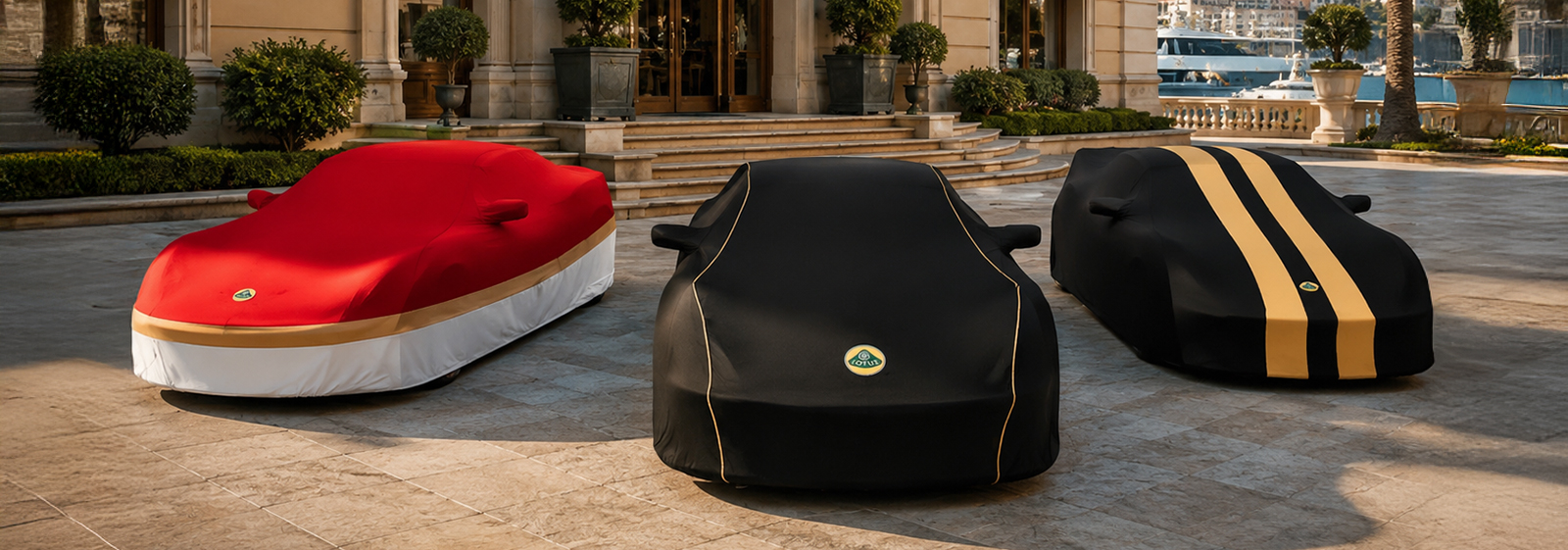
Colour, piping, stripes and emblems come after the protective material and fit have been resolved.
1. Where is the car stored?
A dry garage mainly exposes paintwork to dust, changing temperature and incidental contact. Outdoor storage adds rain, sunlight, frost, organic contamination and wind. A carport or draughty outbuilding sits somewhere between the two, so judge the actual exposure rather than the building’s label.
2. How closely should the cover fit?
A tailored cover gives the closest relationship to the vehicle’s profile and reduces excess material. Semi-tailored sizing offers practical protection at a lower price. Outdoors, fit is especially important because loose sections can move repeatedly in wind.
3. What should touch the paint?
Look beyond the outer face. The inner material must be clean, appropriate for the finish and used on a clean, dry car. Breathability matters because moisture can come from the vehicle and atmosphere, not only from rain.
4. How often will you fit it?
For daily use, weight and handling matter. For longer storage, sustained dust control, airflow and stability become more important. The right answer balances protection with a cover you will actually use correctly.

Side-by-side
Use your storage to narrow the choice
The same car can need a different cover when its storage conditions change.
Useful starting points
Match the range to the environment
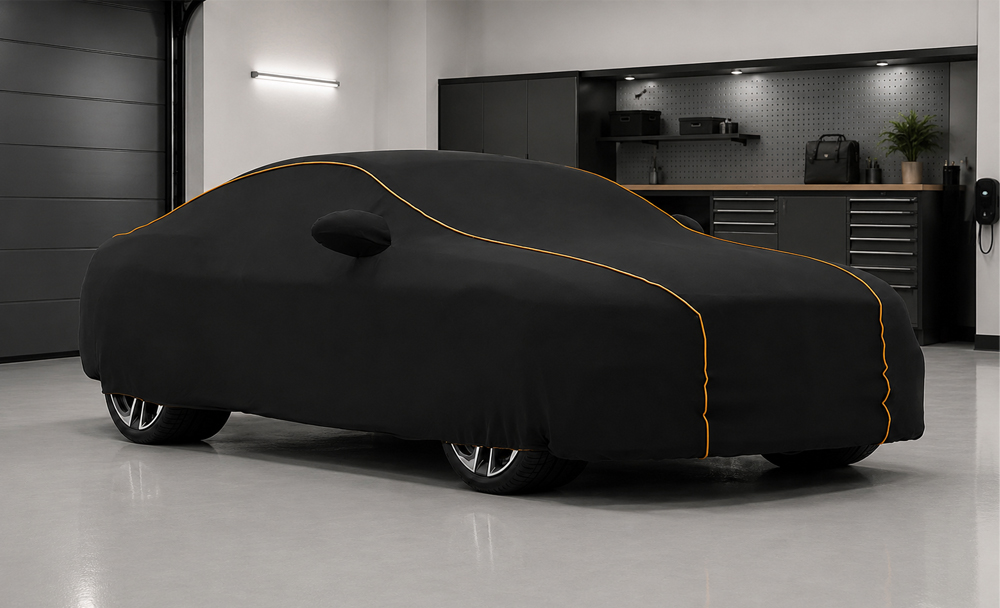
For enclosed storage
STARTING FROM £469.00
PRESTIGE CUSTOM ™
For outdoor storage
STARTING FROM £309.00
STORMSHIELD ™
Made for your vehicle
Find the right cover for your car
Select your exact vehicle to see compatible cover options shaped around its profile.
Common questions
Choosing a car cover: FAQs
What should I look for when buying a car cover?+
Start with where the car is stored, then consider fit, material, breathability, frequency of use and the hazards around the vehicle. Features only matter when they solve those actual conditions.
Should I choose by car value?+
Value can influence your budget, but storage conditions create the risk. An everyday car outside can need stronger weather protection than a valuable car in a clean, climate-controlled garage.
How tight should a car cover fit?+
It should follow the vehicle securely without being stretched across sharp details. Excessively loose material can move; excessive tension makes fitting difficult and places stress on seams.
Can one cover work indoors and outdoors?+
An outdoor cover may sometimes be used indoors, although it will not offer the same soft, presentation-led finish as a dedicated indoor cover. An indoor cover should not be relied on outdoors.